

Quick answer
Timing matters, but much less than total daily nutrition. For most people, total daily protein, overall calories, and consistent eating patterns do the heavy lifting. Nutrient timing is best used as a fine-tuning tool for performance and recovery.
If you've spent any time in fitness circles, you've probably heard the rule: “Eat protein within 30 minutes after your workout or you'll lose your gains.” This idea sits at the heart of workout nutrition timing and the famous anabolic window. But does the clock around your training session really make or break your results?
For most people, the answer is no. Timing is not a magic switch. What you eat across the entire day matters more than whether your shake lands at minute 20 or minute 70. Still, pre-workout nutrition and post-workout nutrition can be useful when they help you train harder, recover faster, or avoid long stretches without fuel.
The Anabolic Window: Myth vs Reality
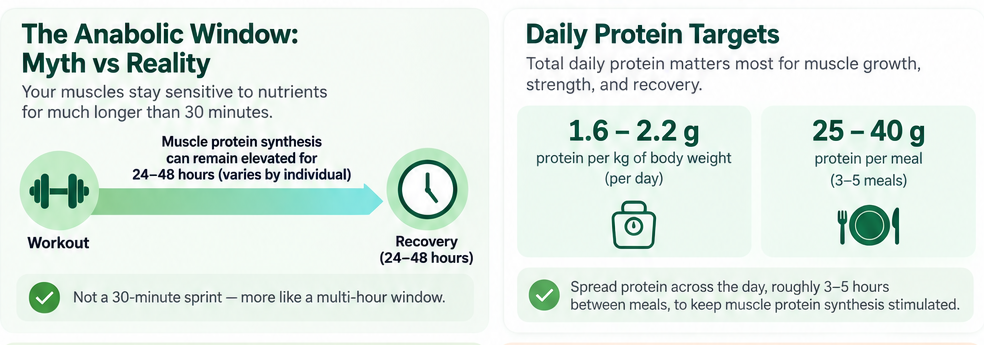
The anabolic window is the supposed brief period after training when your muscles are especially responsive to protein and carbohydrates. Traditional advice often framed this as a strict 30–60 minute deadline after your final set. Modern research supports a much broader view:
- Muscle protein synthesis—the process involved in muscle repair and growth—can remain elevated for roughly 24–48 hours after resistance training, although its magnitude and duration vary.
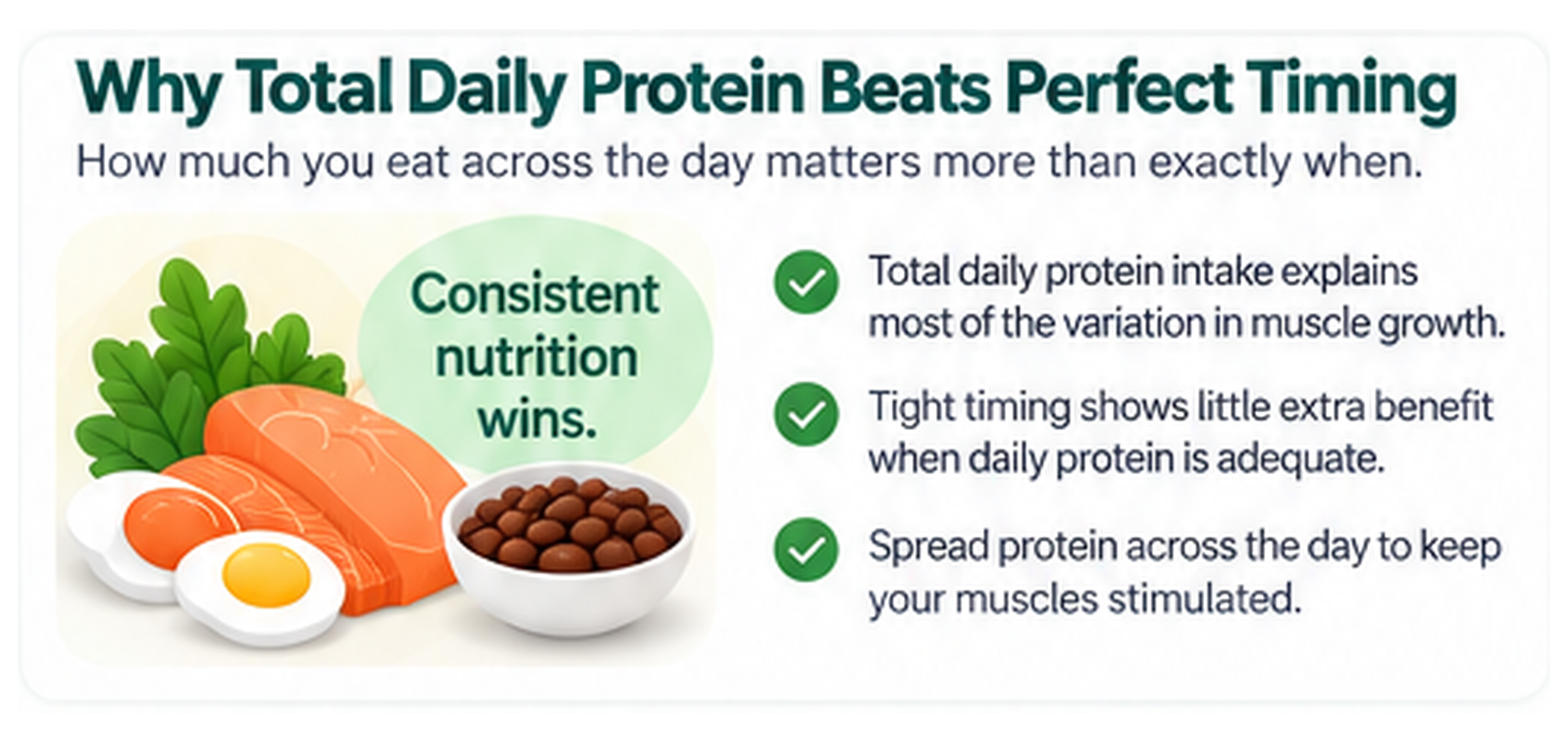
- When studies account for total daily protein, tightly timing protein around a workout often provides little additional advantage for muscle growth.
- The practical “window” partly depends on when you last ate. If you trained after a recent protein-rich meal, another serving is less urgent.
Why Total Daily Protein Beats Perfect Timing
Across systematic reviews and meta-analyses, the pattern is consistent: adequate total protein intake is a stronger driver of muscle and strength adaptations than precise protein timing.
| Target | Practical range | How to use it |
|---|---|---|
| Daily protein | ~1.6–2.2 g/kg/day | The lower end is a strong evidence-based target for many lifters; higher intakes can be practical for some goals or energy deficits. |
| Per meal | ~25–40 g | Aim for a meaningful high-quality protein serving at several meals instead of loading nearly all protein into one sitting. |
| Meal spacing | ~3–5 hours | A practical pattern for spreading protein through the day, not a rigid rule. |
Within this framework, workout nutrition timing becomes a tool that helps you meet daily nutrition targets and support training quality—not a separate shortcut to progress.
When Workout Nutrition Timing Actually Matters
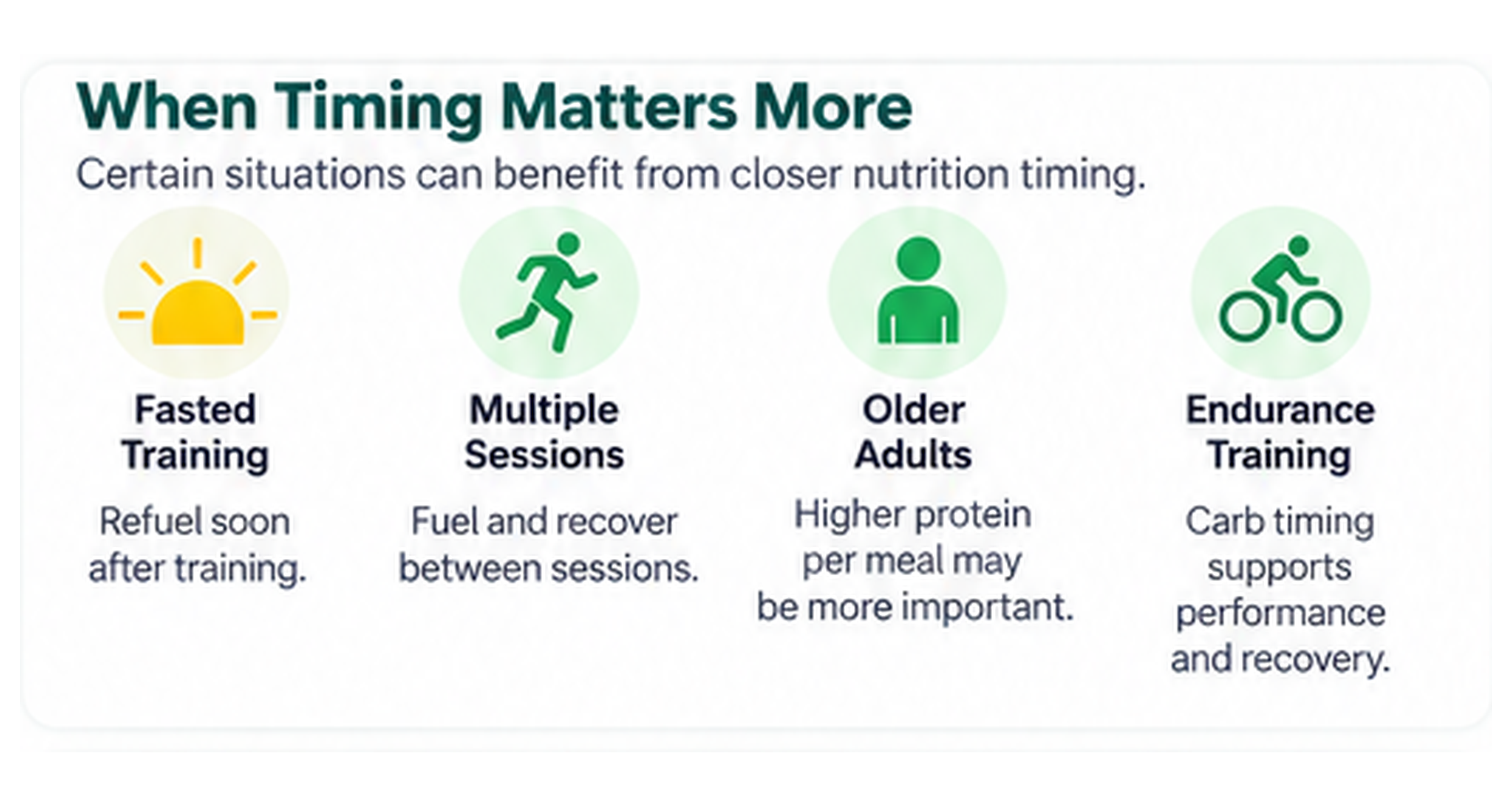
Fasted Training
If you train early after an overnight fast or many hours without food, protein after training is useful. Carbohydrates can also help when the session is long, intense, or performance-focused.
Multiple Sessions Per Day
Pre-workout carbohydrates can support each session. Post-workout carbohydrates plus protein can speed glycogen restoration and recovery between sessions.
Older Adults
Prioritize adequate protein at each meal. A substantial protein-rich meal near training can be a practical way to support muscle maintenance.
Endurance & High Volume
Carbohydrate availability matters more during long runs, cycling, field sports, and high-volume training—especially when another demanding session is coming soon.
Practical Guidelines for Pre-Workout Nutrition
Use these as flexible rules, not rigid laws. The goal is to feel energized, focused, and comfortable during training.
Timing
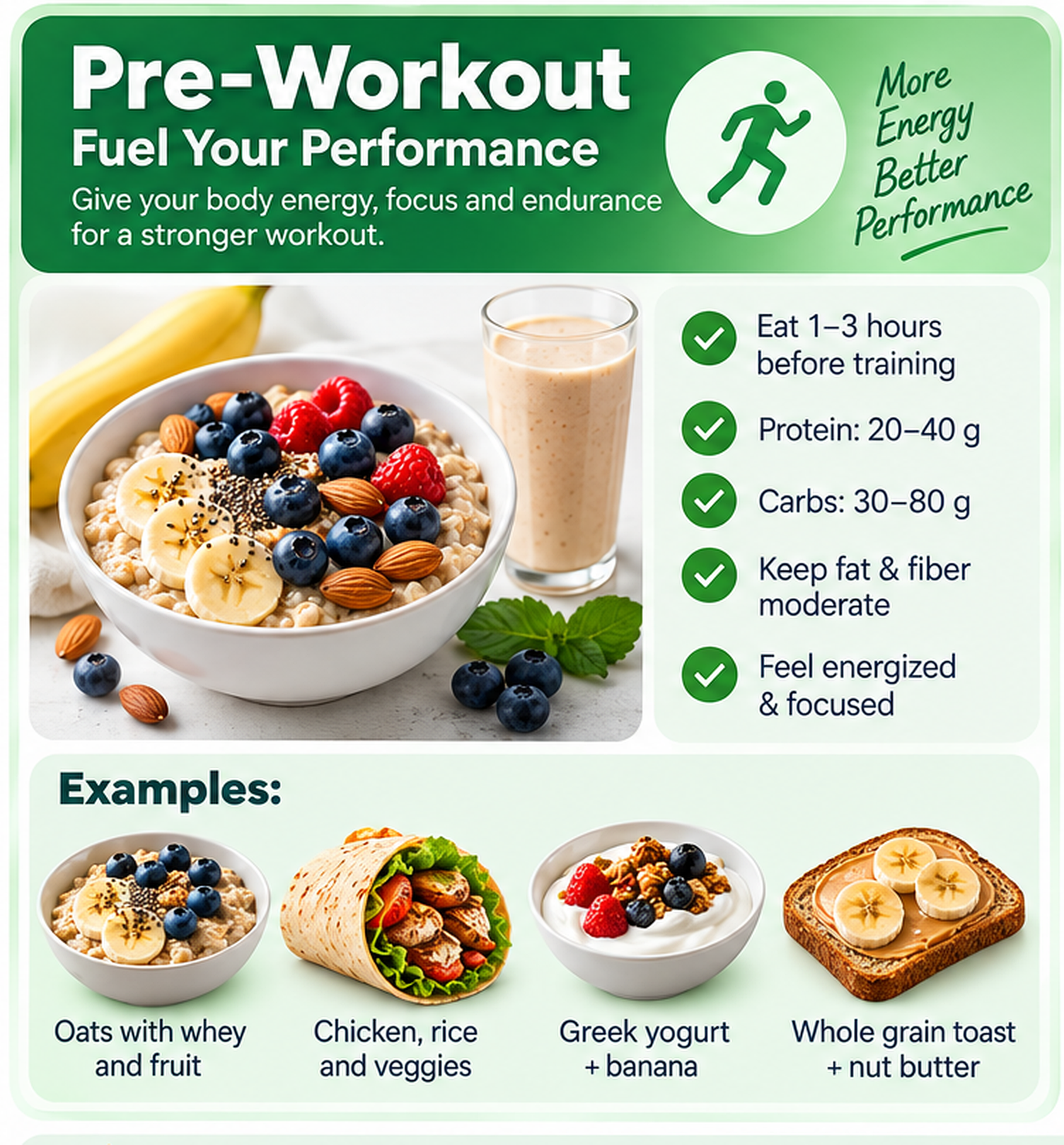
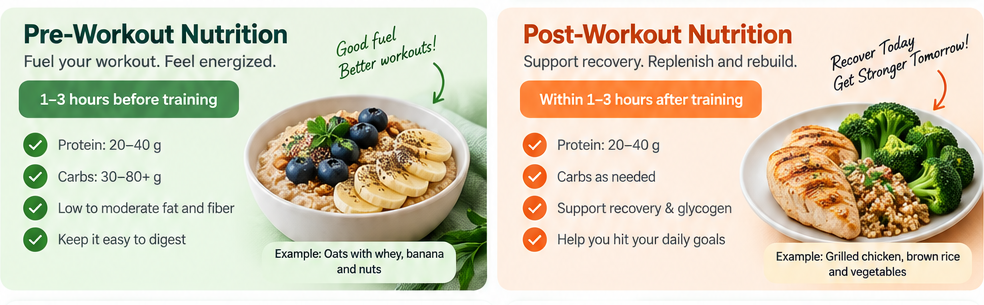
- Aim for a balanced meal about 1–3 hours before training.
- If eating only 30–60 minutes before training, keep the meal or snack smaller and easier to digest.
Composition
- Protein: roughly 20–40 g.
- Carbohydrates: roughly 30–80+ g, depending on session length, intensity, body size, and goals.
- Keep fat and fiber lower if they cause stomach discomfort close to training.
Examples
- Chicken, rice, and vegetables about 2 hours before lifting.
- Oats with whey and fruit 60–90 minutes before a run.
- Greek yogurt and a banana 45–60 minutes before a HIIT session.
- For very early training, try whey plus fruit or another small protein-and-carbohydrate snack, if tolerated.
Practical Guidelines for Post-Workout Nutrition
The goal is to support recovery, replenish glycogen when needed, and continue meeting your daily protein and energy targets.
Timing
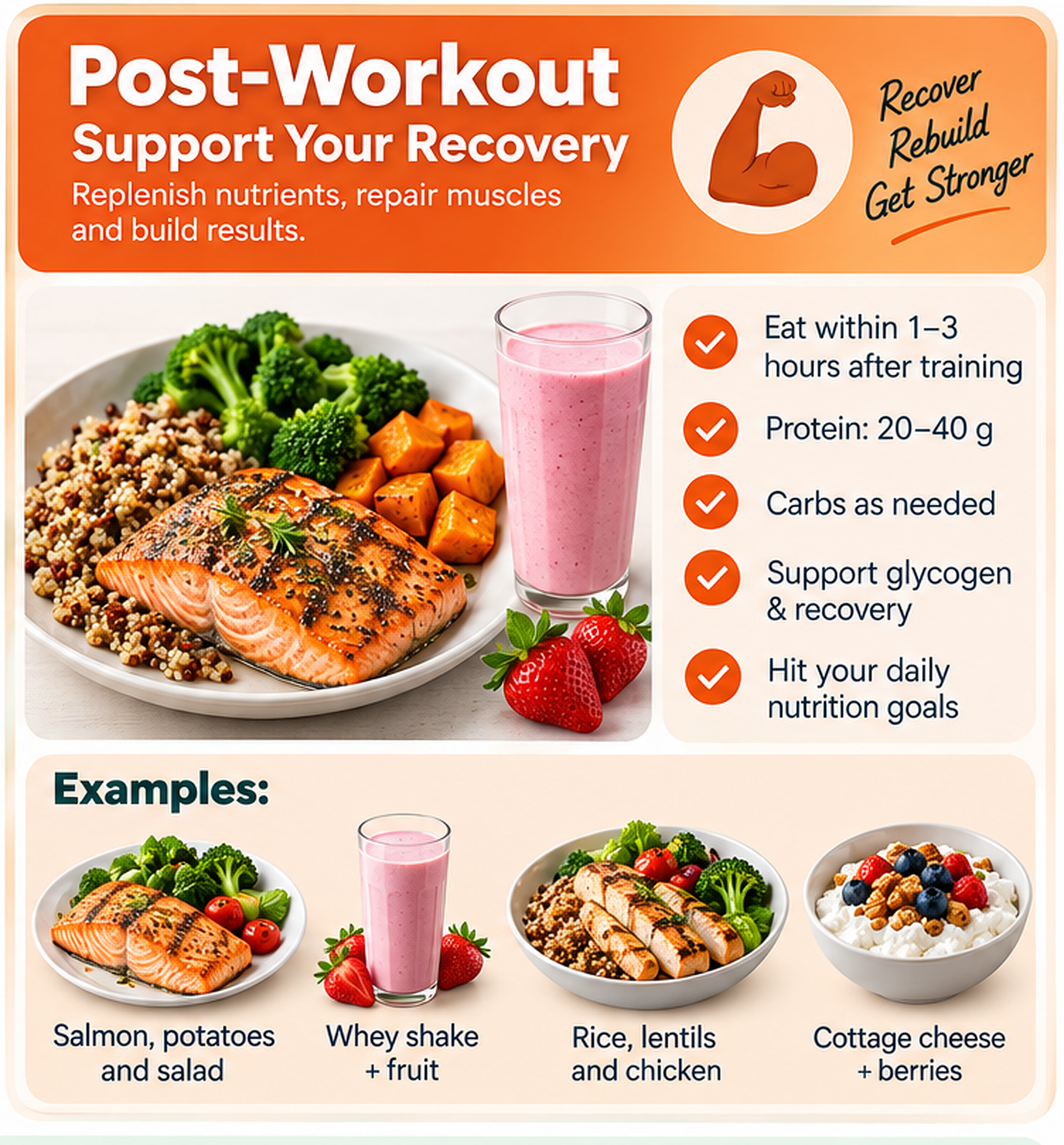
- A meal within roughly 1–3 hours after training is a practical target, particularly if your pre-workout meal was several hours earlier.
- If you ate a substantial protein-rich meal 1–2 hours before training, the urgency is lower; your next normal meal will often be sufficient.
Protein and carbohydrates
- Aim for roughly 20–40 g of high-quality protein from dairy, eggs, meat, fish, soy, legumes, or a protein supplement.
- For typical strength training, include carbohydrates in normal meals; minute-by-minute timing is usually unnecessary.
- For endurance, very high-volume training, or multiple daily sessions, roughly 0.5–1.2 g/kg of carbohydrate over the next few hours may support faster recovery, depending on depletion and time to the next session.
Examples
- Whey shake and fruit if your last meal was several hours ago.
- Salmon, potatoes, and salad within 1–2 hours after lifting.
- Rice, lentils, and chicken after a long run or intense team-sport session.
Common Workout Nutrition Timing Myths—Busted
Myth 1
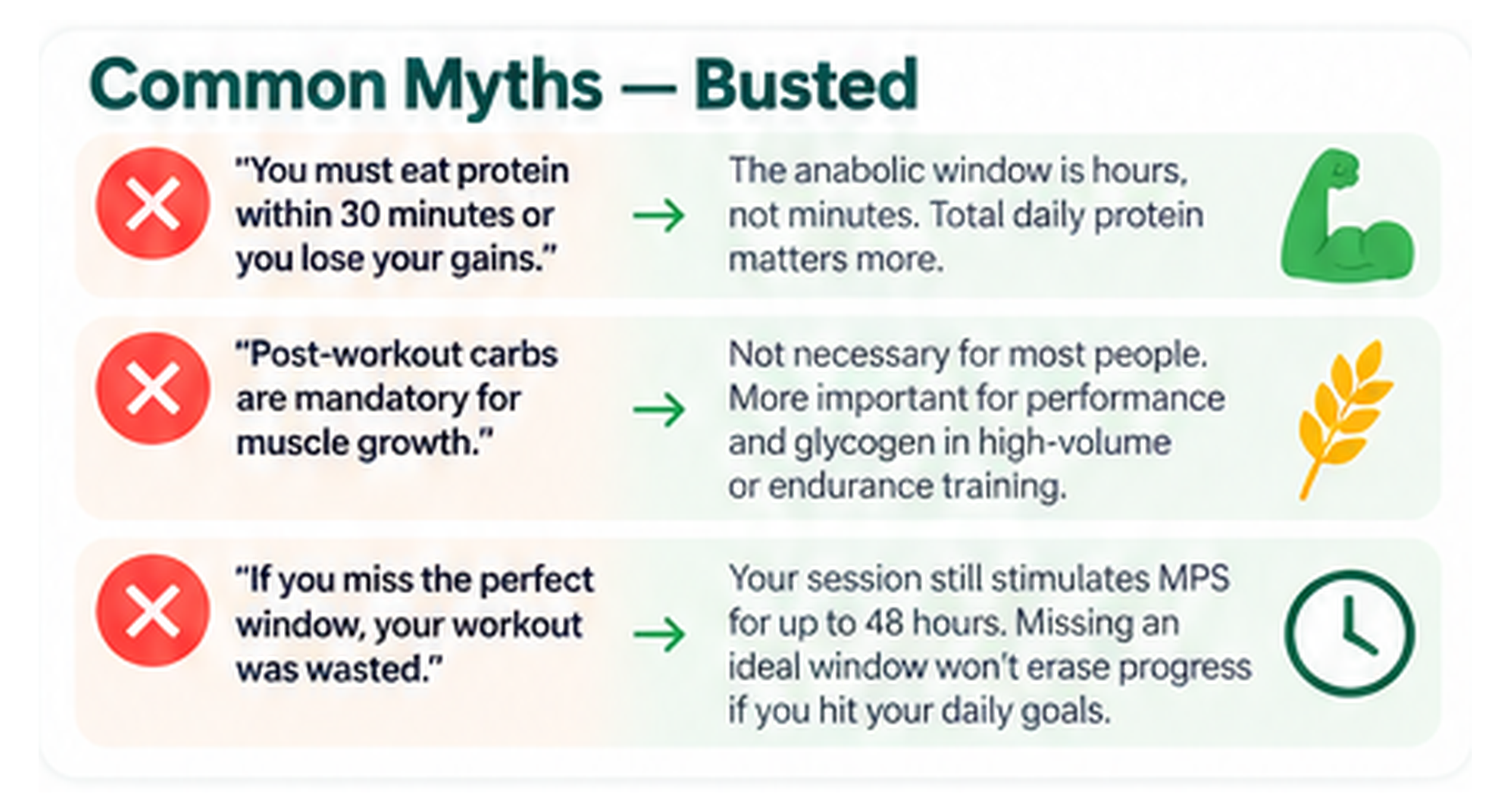
“You must eat protein within 30 minutes or you lose your gains.”
Reality: The useful window is much wider than 30 minutes. Total daily protein and your overall meal pattern matter more.
Myth 2
“Post-workout carbs are mandatory for muscle growth.”
Reality: For typical resistance training with adequate daily carbohydrate intake, precise post-workout timing is usually less important than total intake. Timing matters more when rapid glycogen recovery is needed.
Myth 3
“If you miss the perfect window, your workout was wasted.”
Reality: Exercise continues to influence muscle protein turnover for many hours. Consistently hitting your daily targets protects long-term progress.
Using Workout Nutrition Timing for Different Goals
Muscle Gain
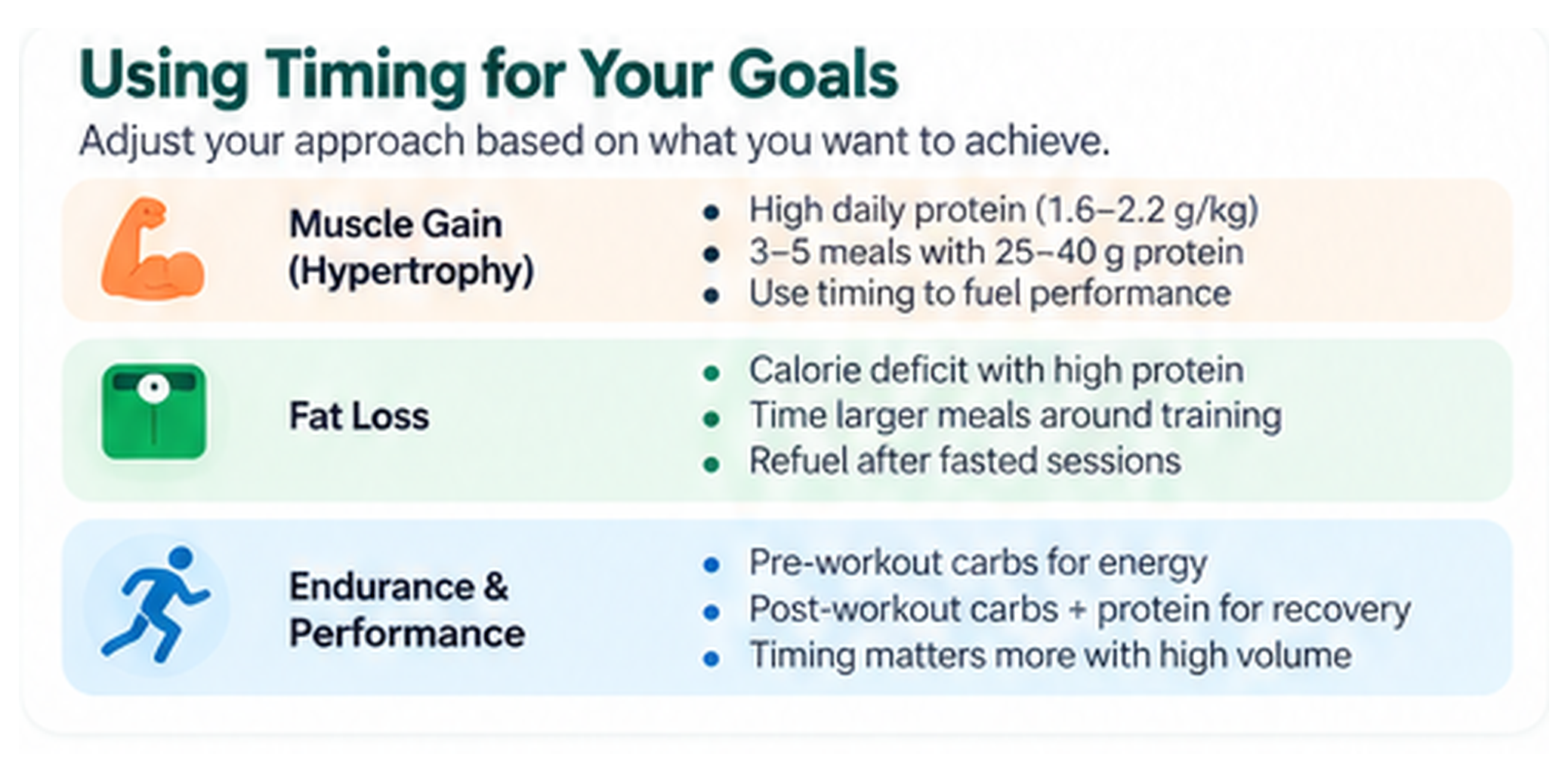
- Build around an adequate daily protein target, commonly around 1.6 g/kg/day or more depending on individual needs.
- Distribute protein across roughly 3–5 meals, often around 25–40 g per meal.
- Place at least one protein-rich meal within a few hours before or after training.
Fat Loss
- Maintain an appropriate calorie deficit while keeping protein relatively high to support lean-mass retention.
- Protein-rich meals around training may help performance and satiety.
- If you train fasted for convenience, prioritize a protein-rich meal after training.
Endurance & Performance
- Use pre-workout carbohydrates to support training quality and sustained effort.
- Combine carbohydrates and protein after longer or more demanding sessions.
- The sooner your next hard session, the more important recovery timing becomes.
The Bottom Line
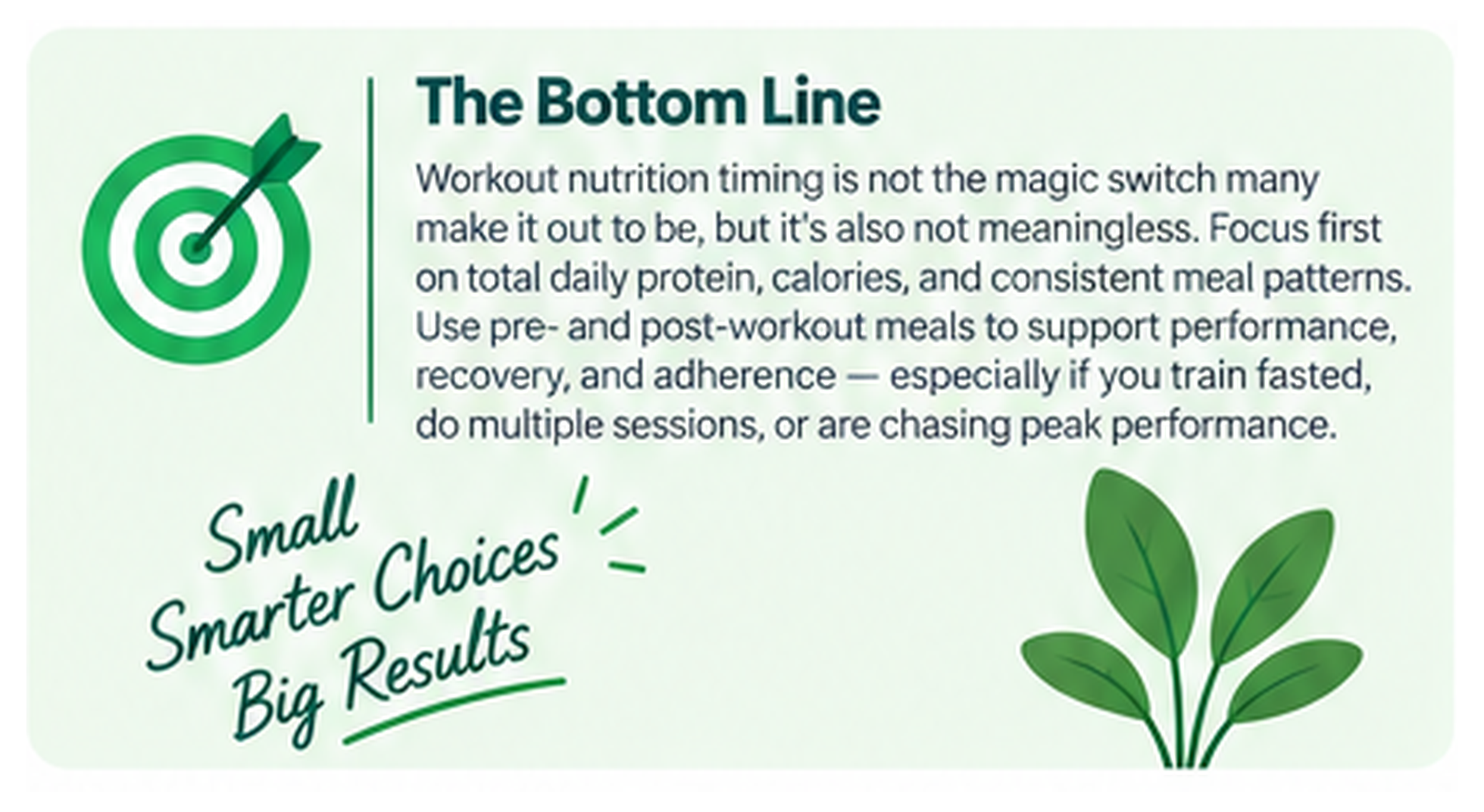
Workout nutrition timing is not magic, but it is not meaningless either. Start with the fundamentals, then use timing to improve performance and recovery—especially for fasted training, two-a-days, and endurance work.
Think of timing as the finishing touch, not the foundation.
Selected References
- Aragon AA, Schoenfeld BJ. Nutrient timing revisited: is there a post-exercise anabolic window? Journal of the International Society of Sports Nutrition. 2013;10:5. doi:10.1186/1550-2783-10-5
- Schoenfeld BJ, Aragon AA, Krieger JW. The effect of protein timing on muscle strength and hypertrophy: a meta-analysis. Journal of the International Society of Sports Nutrition. 2013;10:53. doi:10.1186/1550-2783-10-53
- Morton RW, et al. Protein supplementation and resistance training-induced gains in muscle mass and strength: a systematic review and meta-analysis. British Journal of Sports Medicine. 2018;52:376–384. doi:10.1136/bjsports-2017-097608
- Kerksick CM, et al. International Society of Sports Nutrition position stand: nutrient timing. Journal of the International Society of Sports Nutrition. 2017;14:33. doi:10.1186/s12970-017-0189-4
Editorial note: This article is educational and is not a substitute for individualized medical or nutrition advice.