
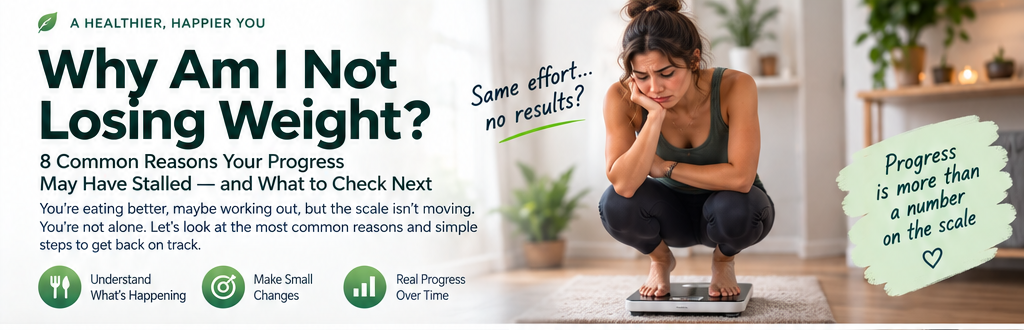
Start with the trend
A few days of scale movement can hide what is happening over several weeks. The useful question is not “What am I doing wrong?” but “What pattern should I check next?”
You're eating better, maybe exercising more, and trying to be consistent—but the scale is barely moving. That can be frustrating. Weight change is influenced by calorie intake and activity, but also by sleep, stress, medications, medical conditions, age, hormones, genes, and environment. The goal of this guide is to help you review those factors without turning one weigh-in into a verdict. CaloPilot's nutrition guide offers additional background on calories, macros, protein, fiber, and hydration.
1. Your Calorie Deficit May Be Smaller Than You Think
Weight loss generally requires taking in fewer calories than your body uses over time. Small extras can narrow or erase that deficit without making your meals look dramatically different. The CaloPilot calorie guide explains the factors behind estimated calorie needs.
| Pattern | Daily average | Weekly total |
|---|---|---|
| Example target | 1,700 kcal/day | 11,900 kcal/week |
| With small extras | 1,900 kcal/day | 13,300 kcal/week |
| Difference | +200 kcal/day | +1,400 kcal/week |
These figures illustrate how a weekly average works; they are not a calorie prescription. Individual needs depend on body size, age, sex, activity, health, and metabolism. The NIDDK Body Weight Planner can provide a more individualized planning estimate for adults.
2. Portion Sizes Can Quietly Grow
A food can be nutritious and still contribute substantial calories. Oils, nuts, nut butters, cheese, avocado, rice, pasta, granola, and restaurant portions are easy to underestimate.
| Food | Smaller portion | Larger portion | What changes |
|---|---|---|---|
| Cooked rice | 1/2 cup | 1 1/2 cups | About 3× the portion |
| Olive oil | 1 teaspoon | 1 tablespoon | About 3× the amount |
| Nuts | Small sprinkle | Large handful | Can add several servings |
| Restaurant entrée | One home-style portion | Large restaurant plate | May contain multiple portions |
You do not need to weigh food forever. A short period of measuring familiar foods can recalibrate your eye for portions. CaloPilot's calorie guide explains how portions and energy intake fit together.
4. Drinks, Snacks, and Weekends Can Change the Weekly Average
A calorie deficit is built across time. A structured Monday–Friday routine can be offset by larger portions, frequent snacks, sugary drinks, alcohol, or restaurant meals over the weekend.
| Pattern | Monday–Friday | Saturday–Sunday | What to notice |
|---|---|---|---|
| Consistent week | Near planned target | Near planned target | Weekly average stays predictable |
| Weekend drift | Near planned target | Several untracked extras | Weekly average may rise |
| All-or-nothing | Very restrictive | Rebound eating | Harder to sustain consistently |
Instead of trying to “make up” for weekends, aim for an eating pattern you can reasonably repeat seven days a week. A daily diary and weekly nutrition view can make the overall pattern easier to see.
5. Activity Helps—but Food Intake Still Matters
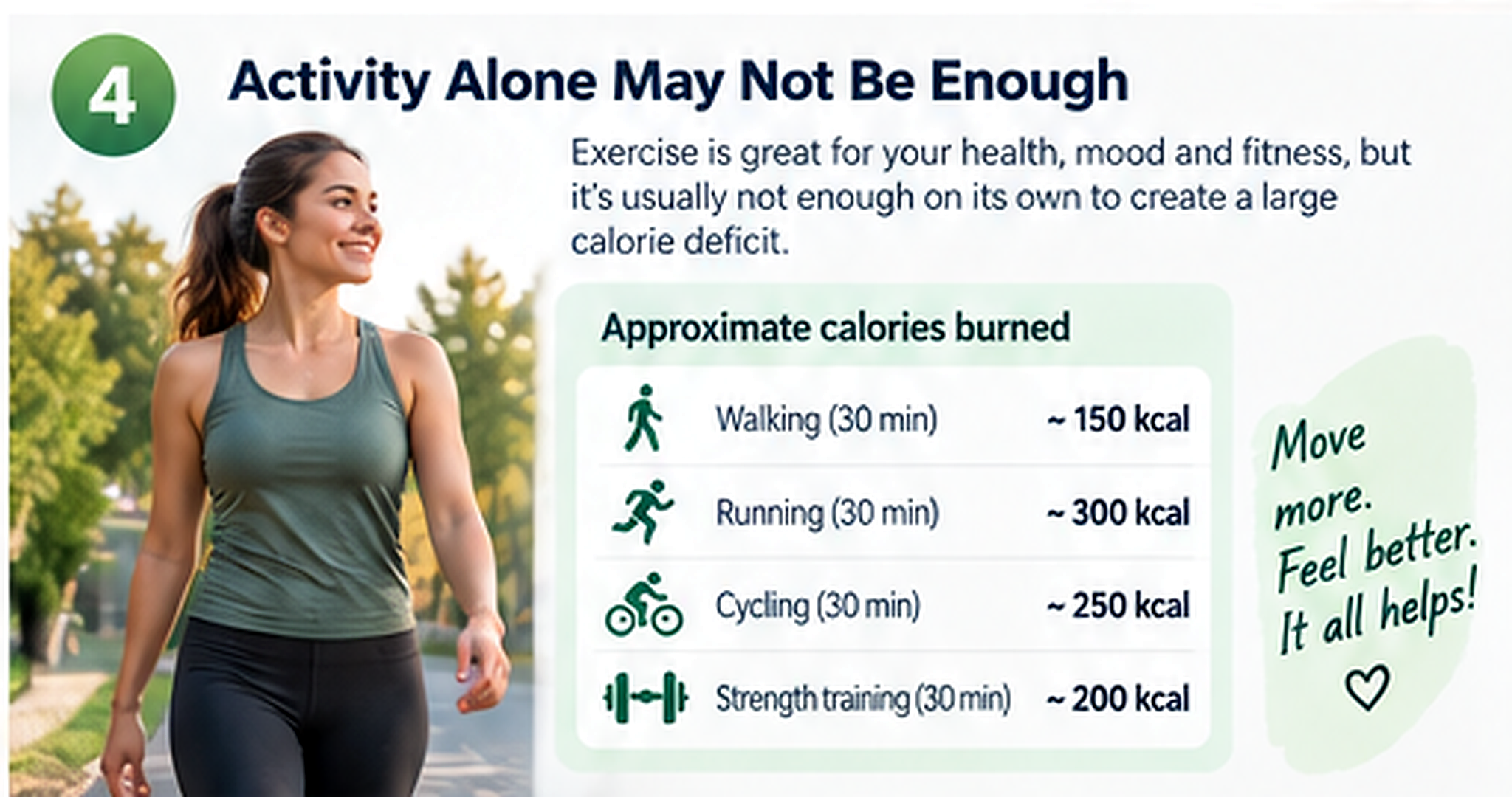
Physical activity is valuable for health and increases energy use. However, exercise alone may not create the deficit you expect, especially if activity increases appetite or leads to larger portions afterward. CDC guidance emphasizes combining healthy eating patterns with regular physical activity for weight management.
- Keep everyday movement in view: walking, stairs, errands, and time spent sitting all contribute to total activity.
- Use exercise for health, fitness, strength, and consistency—not as permission to “earn back” every estimated calorie burned.
- For overall health, adults are generally advised to get at least 150 minutes of moderate-intensity aerobic activity each week plus muscle strengthening on at least two days. Individual needs and abilities vary.
CaloPilot's activity and daily-health tools can keep movement, workouts, water, and nutrition context together.
6. The Scale Can Move Even When Body Fat Has Not
Body weight is not a direct day-to-day measurement of body fat. Water, sodium, carbohydrate intake, digestion, menstrual-cycle changes, and training can all move the scale temporarily.
| What you see | Possible explanation | A better signal |
|---|---|---|
| Weight jumps after a restaurant meal | More sodium, carbohydrate, and water | Watch the next several days |
| Higher weight after a hard workout | Temporary fluid shifts from training | Look at the multi-week trend |
| Daily ups and downs | Normal short-term variation | Compare weekly averages |
| Waist or clothes changing while scale is slow | Body-composition changes may not match scale | Use multiple progress measures |
A single weigh-in is data. A trend is information.
Use CaloPilot's weight-progress and goal-forecasting view to compare individual weigh-ins with the longer-term direction.
7. Sleep and Stress Can Make Consistency Harder
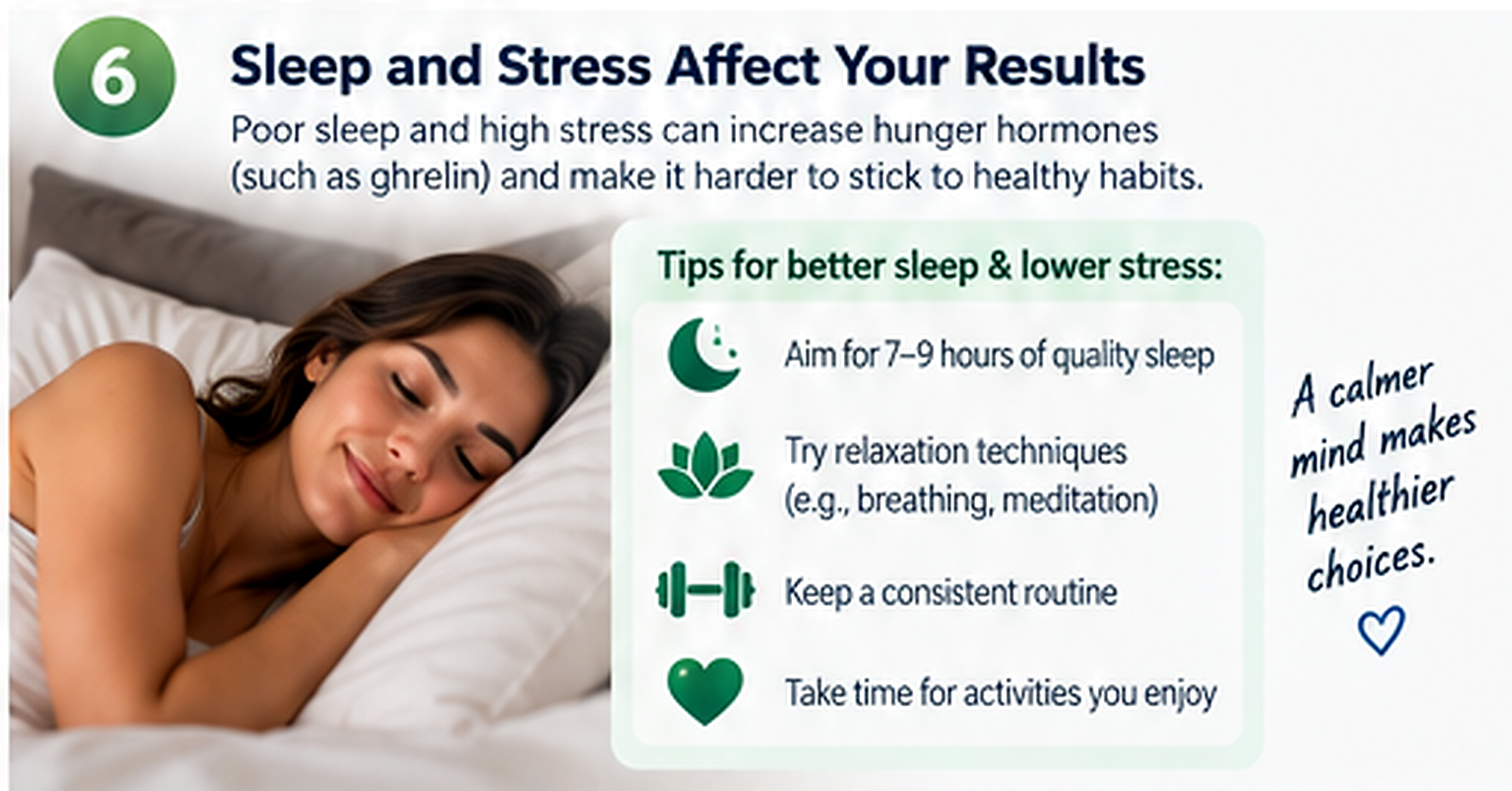
Healthy weight management is not only about food and exercise. CDC guidance includes enough sleep and stress management as part of a healthy weight-loss lifestyle. Short sleep and chronic stress may also make hunger, cravings, planning, and consistent habits more difficult.
- Protect a regular sleep schedule when possible. Most adults need at least seven hours, while individual needs vary by age and health.
- Notice whether short sleep is followed by more snacking, larger portions, or reduced activity.
- Use repeatable stress-management strategies such as walking, relaxation exercises, social support, or structured downtime.
If appetite is the more noticeable concern, see CaloPilot's related guide: Why Am I Always Hungry Even After Eating?
8. Your Needs Can Change—and Other Factors Can Matter

As body weight decreases, the body generally needs fewer calories to maintain the new weight. NIDDK notes that metabolism slows during weight loss and that hormonal and other adaptations can make maintaining weight loss more challenging. This is one reason an approach that worked earlier may eventually need adjustment.
Weight is also influenced by factors beyond behavior. The NIDDK overview of weight factors includes lifestyle, sleep, medicines, health problems, genes, and environment.
A Simple Two-Week Weight-Loss Plateau Check
| Check | What to do for 14 days |
|---|---|
| Food and drinks | Log meals, snacks, drinks, oils, and sauces consistently |
| Portions | Measure a few calorie-dense foods to recalibrate estimates |
| Activity | Track steps or activity and keep your routine reasonably consistent |
| Weight | Use consistent weigh-in conditions and compare averages |
| Sleep | Record approximate sleep duration and quality |
| Stress and routine | Note high-stress days, restaurant meals, and weekend changes |
| After two weeks | Review the pattern before deciding what to change |
Use the CaloPilot food diary and progress tools to keep the two-week review in one place.
Where CaloPilot Can Help
The purpose of tracking is not to obsess over every number. It is to make patterns easier to see. CaloPilot can help you keep calories and macros in one place, log meals, review progress, and use meal-planning tools around your goals and food preferences.
- Track calories, protein, carbohydrates, and fat with the food diary and macro dashboard.
- Use Photo AI and other fast logging options as a convenient starting estimate, then review and adjust when needed.
- Use weight trends and goal forecasting instead of reacting to one day.
- Build meal plans and weekly targets around your goals, preferences, and routine.
- See the complete flow on How CaloPilot Works, or download CaloPilot to get started.
Small changes. Real progress.
Sources and Further Reading
- Centers for Disease Control and Prevention. Steps for Losing Weight.
- Centers for Disease Control and Prevention. Physical Activity and Your Weight and Health.
- Centers for Disease Control and Prevention. Tips for Maintaining Healthy Weight.
- Centers for Disease Control and Prevention. Risk Factors for Obesity.
- National Institute of Diabetes and Digestive and Kidney Diseases. Eating and Physical Activity to Lose or Maintain Weight.
- National Institute of Diabetes and Digestive and Kidney Diseases. Factors Affecting Weight and Health.
Editorial note: This article is general education, not a diagnosis or substitute for individualized care. Calorie needs and safe weight-management approaches differ by person. Talk with a qualified health care professional or registered dietitian if you have symptoms, take medicines that may affect weight, have a history of disordered eating, are pregnant or breastfeeding, or plan a substantial dietary change.